

HIPEC for Advanced Ovarian Cancer
Hyperthermic intraperitoneal chemotherapy (HIPEC)
Helping you to understand
At Gynae Solution, we will use plain language to explain what you have, what the treatment options are and what your prognosis is in terms you can understand.
What is HIPEC?
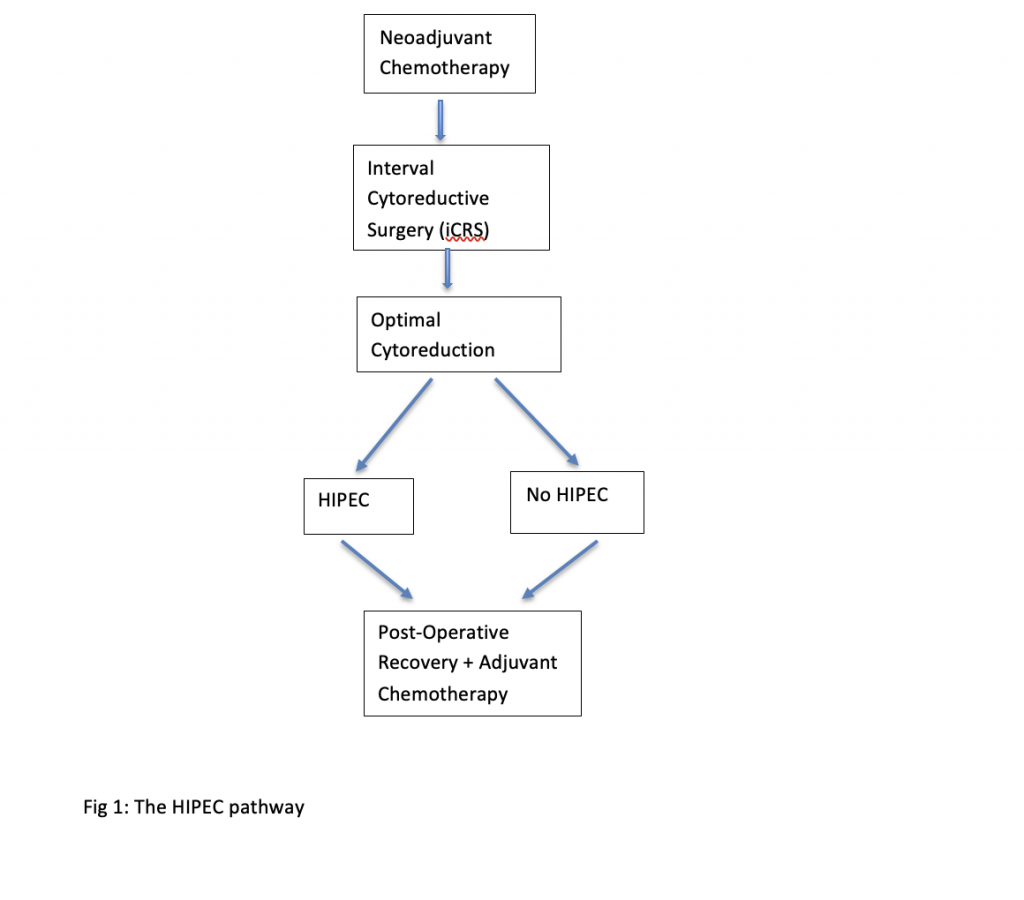
Hyperthermic intraperitoneal chemotherapy (HIPEC) is an intra-operative treatment in which heated chemotherapy is circulated within the abdominal cavity immediately after cytoreductive surgery. In the ovarian cancer pathway that has the strongest randomised evidence, HIPEC is used at the time of interval cytoreductive surgery after neoadjuvant carboplatin and paclitaxel in patients with stage III epithelial ovarian cancer when complete or optimal cytoreduction is feasible.
Listening to you
It's important to find a consultant who will listen to your concerns to help explain and answer any questions you might have.
What the procedure entails
The operation begins with interval cytoreductive surgery through a midline laparotomy, with the aim of removing all visible tumour or reducing residual disease to a minimum. The procedural scope may include hysterectomy, bilateral salpingo-oophorectomy where applicable, omentectomy, pelvic or abdominal peritonectomy, diaphragmatic stripping or resection, splenectomy, bowel resection or anastomosis, and other upper abdominal procedures where required. HIPEC is then delivered only if the patient has been optimally cytoreduced, in line with the conditional “go/no-go” approach described in the clinical pathway and consent documentation.
Your existing internal pathway documents also describe peri-operative preparation, including blood tests, renal assessment, bowel preparation, antibiotic prophylaxis, haemoglobin and nutrition optimisation, and peri-operative fluid and renal monitoring during HIPEC. The same materials list recognised risks of ultra-radical cytoreductive surgery and HIPEC, including bleeding, infection, injury to bowel or urinary tract, pleural complications, pancreatic leak, thromboembolism, ileus, fistulae, haematological toxicity and renal impairment.
Who may be considered for HIPEC?
The best-supported indication is advanced stage III epithelial ovarian, fallopian tube or primary peritoneal cancer treated with neoadjuvant chemotherapy and then interval cytoreductive surgery. In OVHIPEC-1, patients were eligible if they had at least stable disease after three cycles of carboplatin and paclitaxel, a WHO performance status of 0 - 2, normal blood counts and adequate renal function, and if complete or optimal cytoreduction was considered feasible at surgery.
The evidence base
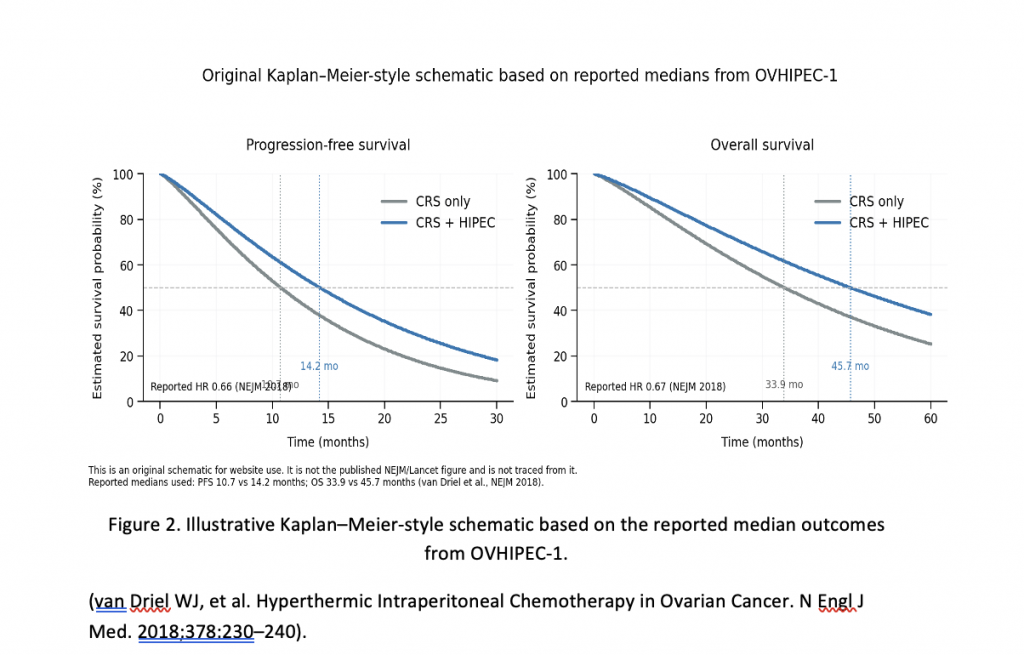
The landmark OVHIPEC-1 phase III trial published in 2018 randomised 245 patients with stage III epithelial ovarian cancer to interval cytoreductive surgery with or without HIPEC using cisplatin 100 mg/m². The primary endpoint was recurrence-free survival and overall survival was a key secondary endpoint. The trial reported a median recurrence-free survival of 14.2 months in the surgery-plus-HIPEC group versus 10.7 months in the surgery-only group (hazard ratio 0.66, 95% confidence interval 0.50-0.87; P=0.003). Median overall survival was 45.7 months with HIPEC versus 33.9 months without HIPEC (hazard ratio 0.67, 95% confidence interval 0.48–0.94; P=0.02). Grade 3-4 adverse events were reported as similar between groups (27% versus 25%; P=0.76).
Benefits of HIPEC
The clearest potential benefit demonstrated in randomised evidence is improved progression-free and overall survival when HIPEC is added to interval cytoreductive surgery after neoadjuvant chemotherapy in carefully selected patients with stage III epithelial ovarian cancer. Contemporary reviews and meta-analyses continue to identify the interval setting after neoadjuvant chemotherapy as the most strongly supported clinical use-case.
Risks and limitations
HIPEC is not a minor adjunct; it is used in the context of major cytoreductive surgery and both surgery and HIPEC carry recognised risks. NICE states that evidence on safety shows frequent and serious but well-recognised complications, and that the evidence on efficacy is limited in quality; for that reason, NICE recommends that cytoreductive surgery with hyperthermic intra-operative peritoneal chemotherapy should be used only with special arrangements for clinical governance, consent, and audit or research.
The 2024 ESGO-ESMO-ESP consensus recommendations acknowledge OVHIPEC-1 and its findings, but they do not recommend HIPEC as routine standard of care for all newly diagnosed advanced epithelial ovarian cancers. Instead, the consensus emphasises that the results apply to a highly selected population and that delivery should be restricted to specialised centres with expert surgery, careful selection and structured data collection.
How I explain HIPEC to patients and readers
HIPEC can be described as a carefully selected enhancement to surgery rather than a stand-alone treatment. The aim is to remove all visible disease, then treat any microscopic residual cancer cells within the abdomen using heated chemotherapy before recovery and further systemic treatment. For the right patient in the right setting, the published evidence suggests a meaningful survival advantage. Equally, the procedure should not be portrayed as routine for every patient with ovarian cancer; its value depends on disease pattern, response to chemotherapy, surgical feasibility, physiological fitness and specialist MDT judgement.
My Disclosure statement
Treatment decisions are individualized. HIPEC is considered only after specialist multidisciplinary review, and that not every patient with ovarian cancer will be suitable for this treatment. There is no evidence of benefit across all ovarian cancer settings. The strongest randomized evidence applies specifically to the interval debulking setting after neoadjuvant chemotherapy.
References
- van Driel WJ, Koole SN, Sikorska K, et al. Hyperthermic Intraperitoneal Chemotherapy in Ovarian Cancer. N Engl J Med. 2018;378:230–240. doi:10.1056/NEJMoa1708618.
- Aronson SL, Lopez-Yurda M, Koole SN, et al. Cytoreductive surgery with or without hyperthermic intraperitoneal chemotherapy in patients with advanced ovarian cancer (OVHIPEC-1): final survival analysis of a randomised, controlled, phase 3 trial. Lancet Oncol. 2023;24(10):1109–1118. doi:10.1016/S1470-2045(23)00396-0.
- 2025 exceptional surveillance of ovarian cancer: recognition and initial management, colorectal cancer, and oesophago-gastric cancer: assessment and management in adults (NICE guidelines CG122, NG151 and NG83).
- Ledermann J, Matias-Guiu X, Amant F, et al. ESGO–ESMO–ESP consensus conference recommendations on ovarian cancer: pathology and molecular biology and early, advanced and recurrent disease. Ann Oncol. 2024;35(3):248–266.
- Internal pathway materials prepared by Mr Jafaru Abu, including Introducing HIPEC) - The Park Hospital; Guideline for CRS HIPEC copy; and Ultraradical surgery consenting process copy.